Skip to content
All Collections
Collection

Philosophy

Philosophy is the most Lindy of all disciplines. Works written by Plato, Aristotle, Marcus Aurelius, and Immanuel Kant have been read, debated, and built upon for centuries — and will continue to be so for centuries to come. Unlike most modern intellectual output, classical philosophy deals with questions that do not expire: What is justice? How should we live? What can we know? The books in this collection have proven their worth across the most rigorous filter imaginable: time itself.
Cover of Tractatus Logico-Philosophicus
Ludwig Wittgenstein

Tractatus Logico-Philosophicus

A razor-sharp text aiming to identify the definitive relationship between language and reality.
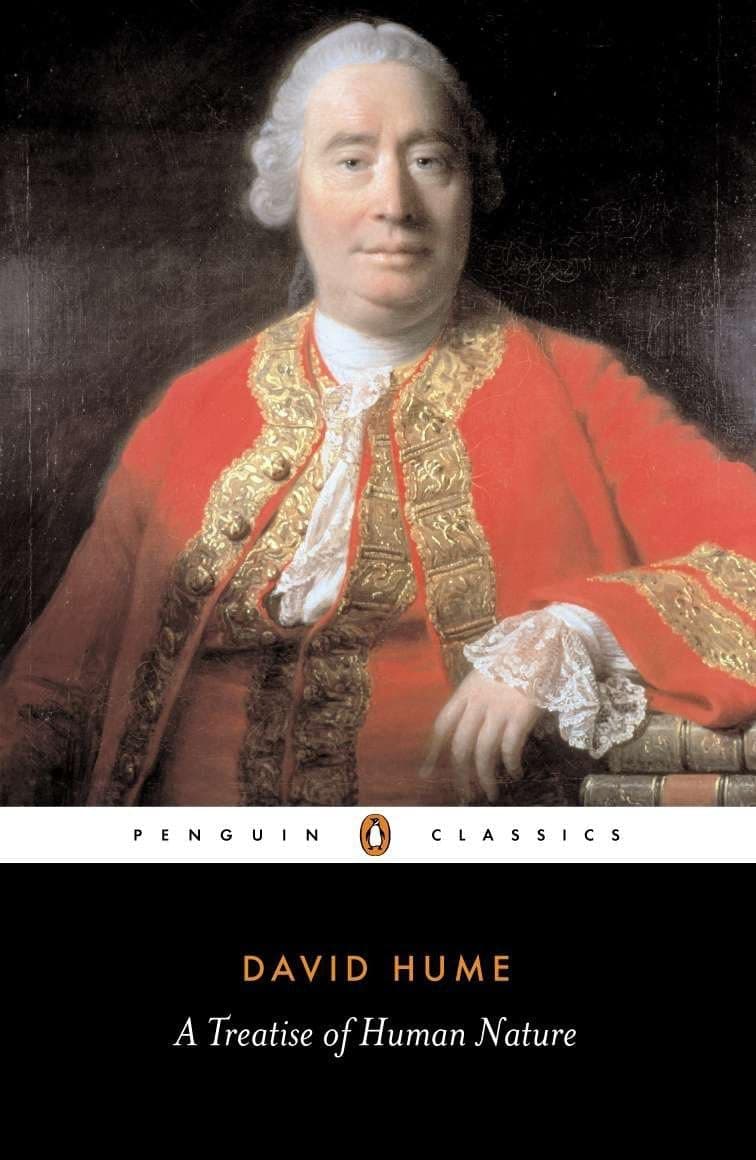
Cover of A Treatise of Human Nature
David Hume

A Treatise of Human Nature

An attempt to introduce the experimental method into subjects like morality and human understanding.

Cover of Pensées
Blaise Pascal

Pensées

A collection of fragments on theology, philosophy, and human distraction.

Cover of On the Shortness of Life
Seneca

On the Shortness of Life

A moral essay explicitly dealing with the value of time.

Cover of The Myth of Sisyphus
Albert Camus

The Myth of Sisyphus

An essay introducing "the absurd," arguing we must imagine Sisyphus happy as he pushes his boulder.

Cover of Hagakure
Yamamoto Tsunetomo

Hagakure

A practical and spiritual guide for a warrior, emphasizing that the way of the samurai is death.

Cover of The Book of Five Rings
Miyamoto Musashi

The Book of Five Rings

A text on Kenjutsu and the martial arts in general, written by the undefeated samurai.

Cover of Utilitarianism
John Stuart Mill·1863

Utilitarianism

In five compact essays, Mill refines and defends the utilitarian principle — that actions are right insofar as they promote happiness, wrong insofar as they produce the reverse. Mill's crucial contribution is the distinction between higher and lower pleasures: the happiness of a human being is not the happiness of a pig. The most readable and enduring defense of consequentialist ethics.

Cover of De Officiis
Marcus Tullius Cicero·44 BC

De Officiis

Written in the final months of his life, Cicero's meditation on moral duty draws on Stoic philosophy to define the obligations of citizens, leaders, and friends. The most printed secular book in early modern Europe, it shaped the Renaissance conception of civic virtue and was among the first classical texts Gutenberg printed.

Cover of Essays and Aphorisms
Arthur Schopenhauer·1851

Essays and Aphorisms

Drawn from Parerga and Paralipomena, this collection of essays and maxims is Schopenhauer at his most readable — on suffering, boredom, solitude, the will, the consolations of art, and the wisdom of silence. It is what made him famous in his lifetime, and what Nietzsche, Tolstoy, and Borges all read in their formative years.

Cover of The Apology of Socrates
Plato·399 BC

The Apology of Socrates

Plato's account of Socrates' trial and defence before the Athenian jury. The founding document of the Western ideal that one must follow reason even at the cost of one's life.

Cover of De Beneficiis
Seneca·64

De Beneficiis

Seneca's seven-book treatise on the nature of giving and gratitude — one of the deepest investigations into obligation, generosity, and the social fabric of human life in antiquity.

Cover of The Analects
Confucius·479 BC

The Analects

The collected sayings and conversations of Confucius, compiled by his disciples after his death. The moral and social framework that has governed East Asian civilisation for 2,500 years.

Cover of The Problems of Philosophy
Bertrand Russell·1912

The Problems of Philosophy

Russell's concise introduction to the central problems of epistemology and metaphysics. The clearest gateway to serious philosophy ever written.

Cover of Philosophical Investigations
Ludwig Wittgenstein·1953

Philosophical Investigations

Wittgenstein's late masterwork, dismantling centuries of philosophical confusion by tracing how language actually works in everyday use. His own repudiation of the Tractatus.

Cover of The Book of Chuang Tzu
Zhuangzi·300 BC

The Book of Chuang Tzu

The second great text of Taoism, written by the philosopher Zhuangzi around the 4th century BC. Full of parables, paradoxes, and dark humour, it challenges conventional notions of knowledge, morality, and the boundaries between life and death.

Cover of Tao Te Ching
Lao Tzu·600 BC

Tao Te Ching

Written in the 6th century BC by Laozi, the Tao Te Ching is the fundamental text of Taoism — a brief, poetic meditation on the nature of existence, leadership, and the art of effortless action. One of the most translated books in existence.

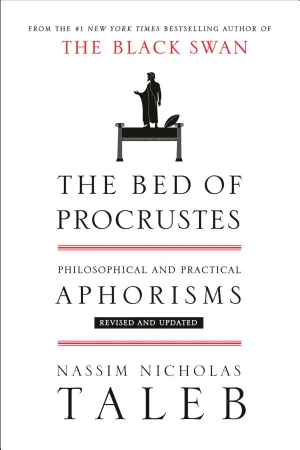
Cover of The Bed of Procrustes
Nassim Nicholas Taleb·2010

The Bed of Procrustes

A collection of philosophical aphorisms exploring antifragility, uncertainty, ethics, and the human tendency to force reality to fit our models rather than the other way around.

Cover of Skin in the Game
Nassim Nicholas Taleb·2018

Skin in the Game

An argument that having personal risk in the outcome of decisions is the foundation of fairness, commercial efficiency, ethics, and the resilience of systems. Without skin in the game, experts and institutions become dangerously detached from consequences.

Cover of Fooled by Randomness
Nassim Nicholas Taleb·2001

Fooled by Randomness

A book about the hidden role of chance in markets and in life, arguing that we systematically underestimate the impact of randomness while overestimating skill and cause-and-effect narratives.

Cover of Essays
Michel de Montaigne·1580

Essays

Montaigne's collection of personal reflections on everything from cannibals to experience. The inventor of the essay form.

Cover of Thus Spoke Zarathustra
Friedrich Nietzsche·1883

Thus Spoke Zarathustra

Nietzsche's philosophical novel presenting his ideas on the Übermensch, eternal recurrence, and the will to power.

Cover of The Critique of Pure Reason
Immanuel Kant·1781

The Critique of Pure Reason

Kant's monumental investigation into the nature and limits of human knowledge. One of the most influential and difficult books in the Western philosophical canon.

Cover of On the Nature of Things
Lucretius·55 BC

On the Nature of Things

An epic poem explaining Epicurean philosophy and the atomic theory of matter. Argues for a universe without divine intervention or fear of death.

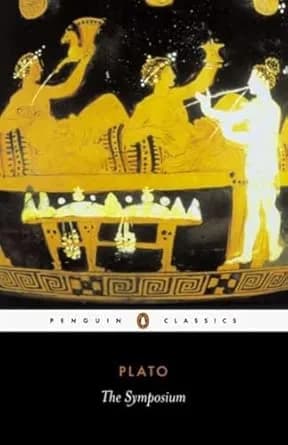
Cover of The Symposium
Plato·385 BC

The Symposium

A series of speeches on the nature of love, culminating in Socrates' account of his conversation with the wise woman Diotima.

Cover of Beyond Good and Evil
Friedrich Nietzsche·1886

Beyond Good and Evil

Nietzsche's critique of past philosophers and democratic morality. A prelude to his philosophy of will to power and the revaluation of all values.

Cover of Discourses
Epictetus·108

Discourses

The extended teachings of Epictetus, recorded by his student Arrian. More detailed than the Enchiridion, covering Stoic physics, ethics, and logic.

Cover of Letters from a Stoic
Seneca·65

Letters from a Stoic

One hundred and twenty-four letters written by Seneca to his friend Lucilius, covering friendship, death, time, wealth, and the examined life.

Cover of The Enchiridion
Epictetus·135

The Enchiridion

A concise manual of Stoic philosophy by the freed slave turned philosopher. Contains the Stoic dichotomy of control in its clearest form.

Cover of Nicomachean Ethics
Aristotle·340 BC

Nicomachean Ethics

Aristotle's foundational treatise on virtue, happiness (eudaimonia), and the good life. The foundation of Western moral philosophy.

Cover of The Republic
Plato·375 BC

The Republic

Plato's foundational dialogue on justice, the ideal city-state, and the philosopher-king. The most influential work in the history of Western political philosophy.

Cover of Meditations
Marcus Aurelius·180

Meditations

Personal journal of the Roman Emperor Marcus Aurelius, written as a series of Stoic reflections. One of the most widely read philosophical texts in Western history.

Frequently Asked

Where should I start with Philosophy?

The best entry point is Marcus Aurelius's Meditations — it is personal, practical, and deeply readable. From there, Plato's Republic provides the foundations of Western philosophical thought.

Why are classical philosophy books better than modern ones?

The Lindy Effect suggests that a philosophy book that has been read for 2,000 years is likely to remain relevant for another 2,000. Modern philosophy books have not yet proven their longevity — they may be profound, or they may be forgotten in a decade.

What is Stoicism?

Stoicism is a school of ancient Greek philosophy founded in Athens around 300 BC. Its core teaching is that virtue — reason, justice, courage, and self-control — is the only true good. Key Stoic texts include Meditations by Marcus Aurelius, Letters from a Stoic by Seneca, and Discourses by Epictetus.